
A disaster can change a family’s life within minutes. Floods, earthquakes, landslides, and storms can destroy homes, interrupt livelihoods, and leave people without basic supplies. Families who once managed their daily needs independently may suddenly need help finding food, drinking water, and a safe place to sleep.
Providing essential relief supplies for disaster-affected families helps people manage these difficult days with dignity. The right support should reflect local conditions and what affected families actually need. Essential Relief Supplies for Disaster-Affected Families.
Gurukul Foundation works across causes including disaster relief, annadaan for poor and needy people, cow seva, and monkey seva. Through community participation and crowdfunding, these causes give people an opportunity to turn compassion into practical support.
1. Why Disaster Relief Supplies Matter
Helping Families Meet Immediate Needs
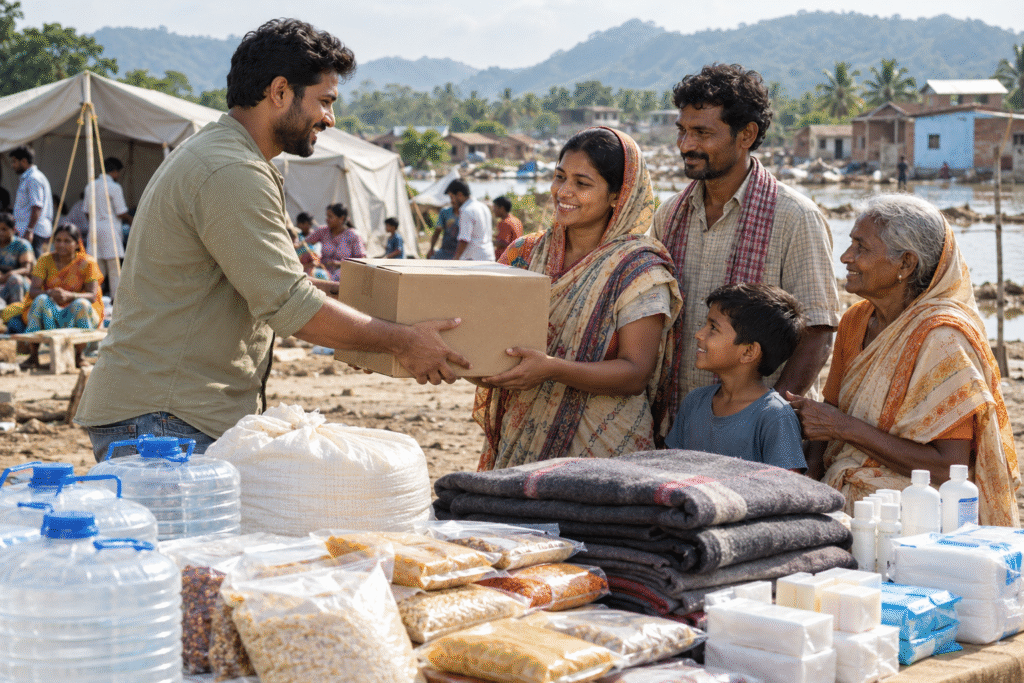
After a disaster, shops may close, roads may become difficult to use, and daily supplies may be unavailable. Families might leave their homes with only a few belongings. Access to basic items can become their biggest concern.
Relief supplies help address these immediate gaps. A meal supports someone who has gone without food. Dry bedding provides comfort after a difficult journey. A hygiene kit helps a family manage everyday personal care.
Supporting Recovery with Dignity
Relief should respect people’s choices, privacy, and circumstances. Families may need different assistance depending on their size, age, health, and living arrangements. Listening before distributing supplies helps make support more useful.
2. Food Supplies and Annadaan
Ready-to-Eat Food for Immediate Support
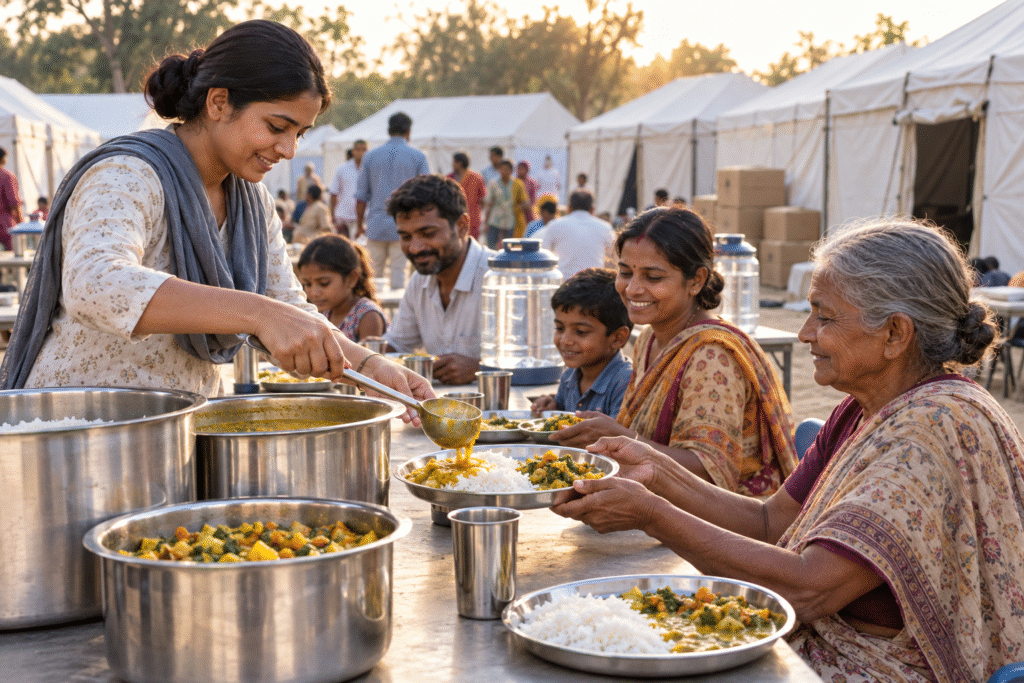
Families staying in temporary shelters may have no kitchen, fuel, or utensils. In these situations, safely prepared meals and suitable ready-to-eat foods can be more practical than uncooked ration packets. Essential Relief Supplies for Disaster-Affected Families.
Food should suit local eating habits and consider the needs of children, older people, and anyone with dietary restrictions. Packaging should protect food during transport and distribution.
Dry Rations for Families Who Can Cook
Where safe cooking facilities are available, ration kits can help families prepare familiar meals. Depending on local needs, these kits may include:
- Rice or wheat flour.
- Pulses and other suitable protein sources.
- Cooking oil and basic spices.
- Packaged foods with adequate shelf life.
Annadaan connects the act of giving with a basic human need. Supporting Gurukul Foundation’s community service initiatives offers a way to participate in compassionate action.
3. Safe Drinking Water and Storage Containers
Making Drinking Water a Priority
Access to safe drinking water is a central part of emergency relief. Water supplies may be interrupted, while families staying away from home may struggle to find reliable sources. Essential Relief Supplies for Disaster-Affected Families.
Water support can include drinking water distribution and suitable storage containers. UNICEF identifies water supply, appropriate water treatment, and hygiene supplies as important parts of its emergency work.
Helping Families Store Water Safely
Clean, covered containers help families carry and store drinking water. Containers should be practical to lift, particularly for older people and individuals with limited mobility.
Water treatment products should be supplied with clear instructions and appropriate guidance. Families should follow local public health advice about safe water sources and treatment methods.
4. Shelter Materials and Bedding
Providing Protection from Weather
When homes are damaged or unsafe, families need suitable temporary accommodation. Shelter materials should match the weather, available space, and guidance from local response teams. Essential Relief Supplies for Disaster-Affected Families.
Depending on assessed needs, supplies may include tarpaulins, ground sheets, blankets, sleeping mats, and basic bedding. These items can make temporary living conditions more manageable.
Considering Privacy and Accessibility
A useful shelter provides more than protection from rain or sunlight. Families also need privacy, lighting, and safe access to shared facilities.
Women, children, older people, and people with disabilities may face additional challenges in crowded shelters. Relief planning should consider their needs when choosing materials and arranging distribution.
5. Hygiene Kits and Personal Care Items
Supporting Everyday Cleanliness
Personal care can become difficult when families lose their belongings or move into temporary accommodation. Hygiene kits provide familiar items that people need every day.
A kit may contain soap, toothbrushes, toothpaste, towels, and other locally appropriate essentials. The contents should reflect available water, washing facilities, and family preferences.
Including Menstrual and Incontinence Supplies
Menstrual products and appropriate incontinence supplies should be considered during needs assessments. These items support comfort, privacy, and dignity. Essential Relief Supplies for Disaster-Affected Families.
Distribution should allow people to request personal items discreetly. A standard kit will not suit everyone, so offering suitable choices can make assistance more respectful and effective.
6. Healthcare Access and Basic First Aid
Connecting Families with Qualified Care
Disasters can interrupt access to healthcare and regular prescriptions. People with ongoing health conditions may need help reaching medical services or replacing essential documents. Essential Relief Supplies for Disaster-Affected Families.
Healthcare support should be coordinated with qualified professionals. Medicines should follow assessed needs and professional guidance rather than being added randomly to donation boxes.
Providing Appropriate First-Aid Supplies
Response teams may request basic first-aid materials such as dressings and bandages. These supplies should be clean, within their expiry dates where applicable, and suitable for the people using them. Essential Relief Supplies for Disaster-Affected Families.
Donors should confirm requirements before sending medical products. Matching supplies to actual requests helps avoid waste and supports organised relief efforts.
7. Supplies for Children and Older People
Recognising Children’s Different Needs
Children may need suitable clothing, age-appropriate food, nappies, and basic learning materials. Their requirements vary, so relief teams should speak with parents and caregivers before preparing supplies.
Simple play and learning materials can also provide a familiar activity during displacement. Children should receive assistance in ways that protect their safety and privacy. Essential Relief Supplies for Disaster-Affected Families.
Making Assistance Accessible to Older People
Older people may find long queues, heavy packages, or distant collection points difficult. Smaller packages, seating, and assistance carrying supplies can make distribution easier.
Support should also consider people with disabilities and caregivers who cannot leave family members unattended.
8. How to Donate Useful Relief Supplies
Confirm Requirements Before Sending Goods
Before organising a collection, ask the receiving organisation what it needs, where supplies should go, and which items it can accept. Unrequested goods can create sorting, storage, and transport problems.
Choose usable items, check packaging and expiry dates, and label boxes clearly. Thoughtful preparation helps relief teams distribute support efficiently.
Consider Flexible Financial Support
Financial contributions can help organisations purchase requested supplies. Where local markets are functioning, cash assistance can also give affected people greater choice. Essential Relief Supplies for Disaster-Affected Families.
Before contributing, review the campaign purpose, organisation details, and available updates. Visit Gurukul Foundation to explore its work and available opportunities to help.
9. Keeping Support Available Beyond the Emergency
Helping Families After Initial Relief
Recovery often continues after public attention moves elsewhere. Families may still need food, household essentials, school materials, or help restoring their livelihoods.
Regular giving, where available, can support continuity. Donors should check how recurring contributions are allocated and whether they support a specific campaign or broader charitable work. Essential Relief Supplies for Disaster-Affected Families.
Conclusion: Help Families Take Their Next Step
Providing essential relief supplies for disaster-affected families begins with understanding their needs. Food, safe water, shelter materials, hygiene items, and access to care can offer practical support during uncertainty.
Through Gurukul Foundation, compassion can become participation in disaster relief and other community causes. Explore its initiatives, learn what support is currently required, and contribute in a way that helps families move forward with dignity. Essential Relief Supplies for Disaster-Affected Families.
 Rs.